

What if the very ingredients you’ve chosen for your wellness are the silent culprits behind your social anxiety? It’s a frustrating paradox when a nutritious diet leads to an unpredictable personal scent that even the strongest topical sprays can’t mask. Many people don’t realise that the foods that cause body odour are often the same ones praised in health magazines. You’ve likely spent years layering on perfumes, only to find the scent returns by midday. It feels like a betrayal by your own biology; however, it doesn’t have to be your permanent reality.
We understand the quiet frustration of feeling like you’re constantly managing a secret. This guide promises to transform your approach to hygiene by moving beyond surface-level fixes. You’ll discover the clinical triggers within your diet and learn the exact steps to neutralise them from within for total, lasting confidence. We’ll examine the science of systemic freshness and provide a practical routine to restore your sense of wholeness and personal dignity.
Key Takeaways
- Understand the biological link between your bloodstream and sweat glands to see how internal balance dictates your natural scent.
- Identify the specific foods that cause body odour, including the “Sulphur Squad” and the metabolic residues left by red meat.
- Master a comprehensive routine to neutralise both dietary triggers and the distinct chemistry of nervous sweat for total daily confidence.
- Compare the longevity of internal neutralisation against traditional topical sprays to choose a more sustainable, skin-friendly hygiene routine.
- Discover how a gut-focused approach to internal hygiene can restore your social confidence and provide lasting systemic freshness.
The Biological Connection: How Your Diet Dictates Your Natural Scent
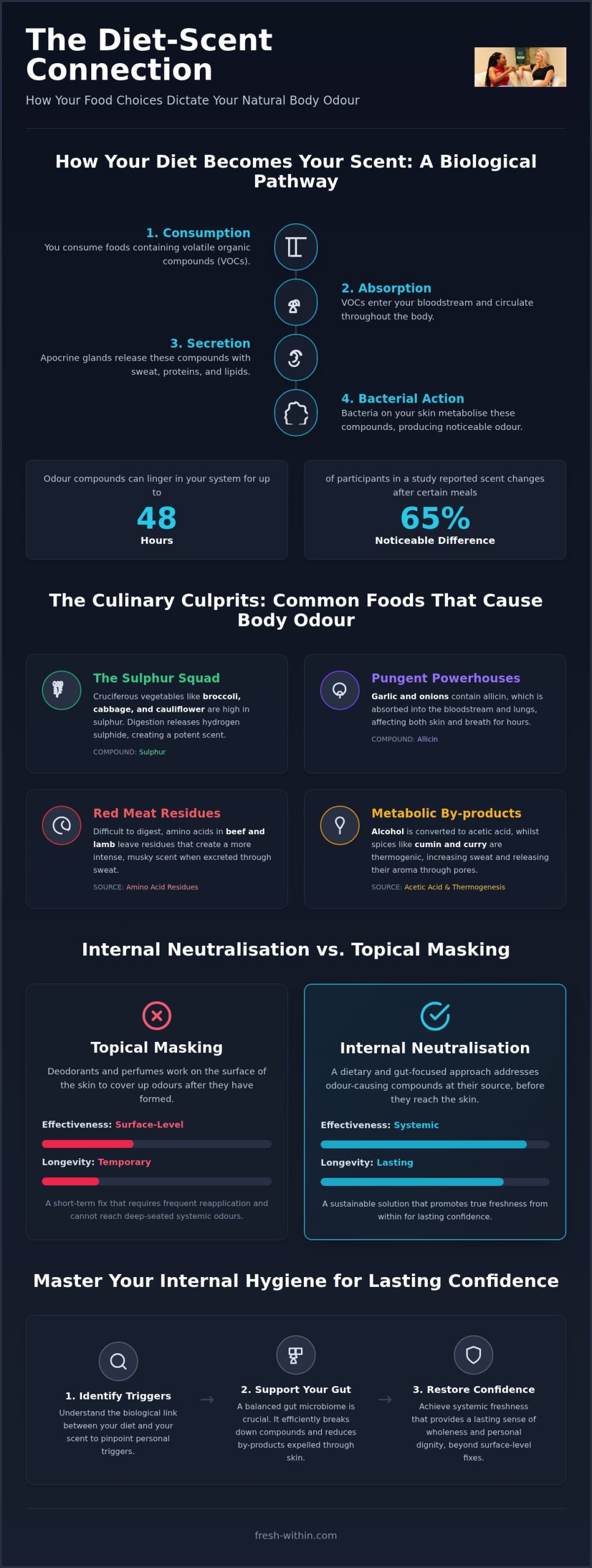
Your body is a sophisticated filter. It doesn’t just discard what you eat; it metabolises every molecule, sometimes releasing the results through your skin. Most people assume sweat is the enemy, but pure perspiration from your eccrine glands is largely odourless water and salt. The real challenge lies within the apocrine glands. These glands, located primarily in the underarms, secrete a thicker fluid rich in proteins and lipids. When this substance meets the bacteria on your skin, the result is the scent we recognise as BO. However, the intensity of that scent is often dictated by your internal chemistry long before it reaches the surface. Understanding the specific foods that cause body odour is the first step towards reclaiming your personal presentation.
Apocrine Glands and the Bloodstream
When you consume certain ingredients, volatile organic compounds (VOCs) enter your bloodstream. These molecules are carried directly to your apocrine glands, where they’re secreted alongside sweat. To truly understand The Biology of Body Scent, we must acknowledge that these compounds can linger in your system for up to 48 hours. Research summarised in March 2026 revealed that 65% of 200 participants experienced noticeable changes in their scent after consuming specific spices and vegetables. This explains why you might still notice a pungent aroma two days after a heavy meal. Traditional washing merely scrubs the surface; it can’t reach the deep-seated systemic odours being pushed out from within. True freshness requires a foundation of internal hygiene that addresses these molecules at the source.
The Gut-Skin Axis and Odour
The efficiency of your digestion plays a pivotal role in how you smell. When your gut microbiome is out of balance, it struggles to break down pungent compounds like sulphur efficiently. This leads to an accumulation of foul-smelling gases that the body must expel. If your gut isn’t processing waste effectively, your skin becomes the secondary exit route for these metabolic by-products.
The gut-skin axis serves as the primary regulator of personal scent by determining how many metabolic by-products are excreted through the pores.
By supporting gut harmony, you ensure that the sweat reaching your skin is as “pure” as possible, reducing the fuel available for odour-causing bacteria. Realising which foods that cause body odour trigger your specific system allows you to manage your scent proactively. It’s about achieving a state of systemic harmony where your internal health reflects your external confidence.
The Culinary Culprits: Common Foods That Cause Body Odour
Identifying the foods that cause body odour is often a process of elimination that begins in the kitchen. Whilst many of these ingredients are nutritional powerhouses, they contain specific chemical markers that your body may struggle to process quietly. From the pungent aroma of a garlic-heavy meal to the subtle, lingering scent of a Sunday roast, what you consume dictates the olfactory signals you send to the world. It’s not a sign of poor hygiene; it’s a sign of metabolic expression.
Sulphur-Rich Vegetables and Allicin
The “Sulphur Squad” includes cruciferous staples like broccoli, cabbage, and cauliflower. These vegetables are packed with beneficial nutrients but also contain high levels of sulphur. When your gut breaks them down, it releases hydrogen sulphide gas. This gas can escape through your breath and pores, creating a scent reminiscent of rotten eggs. Garlic and onions present a unique challenge due to Allicin. This compound is absorbed into the bloodstream and lungs, meaning the scent can be detected on the skin and breath for hours. To mitigate this, consider parboiling your vegetables or pairing them with fresh herbs like parsley, which contains natural chlorophyll to help neutralise the impact.
Red Meat, Alcohol, and Spices
Red meat is notoriously difficult for the digestive system to process. The amino acids in beef and lamb leave behind residues in the gut that, when excreted through sweat, create a more intense, musky aroma. Research suggests that those on a meat-free diet are often perceived as having a more attractive and less intense scent than those consuming red meat regularly. Alcohol adds another layer to this complexity. As the liver processes your drink, it converts ethanol into acetic acid. This acid is then released through your pores, giving the skin a distinctively “boozy” scent. Spices like cumin and curry powder are thermogenic; they raise your internal temperature and dilate your pores, allowing these Common Foods That Cause Body Odour to be expressed more forcefully.
In rare cases, a metabolic condition known as Trimethylaminuria (TMAU), or “Fish Odour Syndrome,” prevents the body from breaking down trimethylamine. This results in a fishy scent that persists regardless of topical hygiene. For most of us, however, the issue is simply a matter of metabolic efficiency. Supporting your system with internal freshness solutions can help manage these dietary triggers, ensuring your favourite meals don’t dictate your social confidence. It’s about finding harmony between what you enjoy eating and how you choose to present yourself to the world.
How to Neutralise Dietary and Nervous Sweat Odours: A Step-by-Step Guide
Freshness is a proactive choice, not a lucky accident. Once you’ve identified the foods that cause body odour in your own diet, the next step is implementing a systemic routine to manage how your body processes these compounds. Neutralising odour isn’t just about scrubbing harder in the shower; it’s about altering your internal chemistry so that what reaches the surface is clean and scent-free. This requires a dual approach that addresses both the metabolic by-products of your meals and the unique physiological response to stress.
Managing the Stress Response
Nervous sweat is fundamentally different from the sweat produced during a workout. Whilst eccrine glands produce watery perspiration to cool you down, your apocrine glands respond to adrenaline and cortisol. This “stress sweat” is significantly higher in lipids and proteins, providing a nutrient-rich buffet for skin bacteria to feast upon. This is why you might notice a sharper, more immediate scent during a high-pressure meeting than you do at the gym. To manage this, focus on lowering your systemic cortisol levels through box-breathing techniques and consistent hydration. Drinking plenty of water acts as a dilution strategy; it helps flush out volatile organic compounds before they can be concentrated in your apocrine secretions. In emergency situations, a quick focus on regulating your heart rate can physically signal your apocrine glands to slow their activity.
Internal Neutralisation Techniques
Modern hygiene relies on the principle of internal neutralisation rather than external masking. Natural neutralisers, such as copper chlorophyllin, act like an internal sponge. These compounds bind to the microscopic odour molecules derived from the foods that cause body odour, preventing them from being excreted through your pores. By incorporating these into a daily routine, you support your body’s natural detoxification pathways and promote systemic harmony.
- Prioritise Hydration: Aim for 2 to 3 litres of water daily to ensure metabolic waste is primarily excreted through the kidneys rather than the skin.
- Support Gut Balance: Use prebiotics like inulin to help your microbiome break down pungent sulphur compounds more efficiently.
- Implement a Capsule Routine: Fresh Within™ Internal Deodorant Capsules are designed for this exact purpose. By taking one capsule twice daily, you provide your system with a consistent supply of chlorophyll, peppermint, and parsley leaf to neutralise scents at the source.
Adopting a “freshness first” supplement routine ensures that your internal hygiene remains consistent, regardless of what you’ve eaten or how stressful your day becomes. It’s a sophisticated way to reclaim control over your personal presentation, moving away from the frustration of temporary sprays and towards a foundation of lasting, quiet confidence.
Internal Neutralisation vs Topical Masking: Which Is More Effective?
Choosing between a topical spray and an internal solution is a matter of deciding whether you want to hide a problem or resolve it. For decades, the standard response to personal scent has been to apply a layer of synthetic fragrance. This approach assumes the issue is merely on the surface. However, as we have explored, the molecules derived from the foods that cause body odour originate deep within your metabolic pathways. Relying solely on external products is like trying to paint over a damp patch without fixing the leaking pipe; eventually, the underlying issue will always resurface. There is a profound sense of empowerment that comes from knowing you are fresh from the inside out, rather than being tethered to a bottle of spray in your bag.
The Limitations of Topical Deodorants
Traditional deodorants work by either killing surface bacteria or using heavy perfumes to overpower your natural scent. They cannot, however, stop the physical excretion of volatile organic compounds (VOCs) through your pores. When the systemic molecules from the foods that cause body odour meet these synthetic fragrances, the result is often an unpleasant “perfumed-BO” mix that is more noticeable than the original scent. Furthermore, many high-street antiperspirants rely on aluminium to physically clog your sweat glands. This creates a barrier that can lead to skin irritation and disrupts your body’s natural cooling process. You can learn more about Why Traditional Hygiene Isn’t Always Enough and why surface-level fixes often fail when diet is the primary driver.
The Benefits of a Systemic Approach
A systemic approach treats your body as a complete, interconnected environment. By using internal neutralisers, you address the source of the scent before it ever reaches the skin’s surface. This method doesn’t just stop at body scent; it often provides the added benefits of fresher breath and a more balanced gut microbiome. When you support your internal hygiene, you’re no longer just masking a symptom. You’re proactively managing your biology to ensure your natural presentation is one of quiet, clean confidence. Whilst topical sprays act as a temporary chemical barrier on the skin’s surface, internal capsules function as a systemic neutraliser that binds to odour molecules before they can be excreted.
By moving away from harsh chemicals and embracing internal harmony, you protect your skin’s delicate microbiome whilst achieving a level of freshness that doesn’t wash off. It’s a modern, sophisticated way to handle your personal hygiene. If you’re ready to stop hiding and start neutralising, it’s time to experience the freedom of systemic freshness. True confidence shouldn’t depend on how recently you’ve reapplied a spray; it should be a fundamental part of who you are.
Fresh Within™: Master Your Internal Hygiene for Lasting Confidence
Managing the metabolic impact of the foods that cause body odour requires a shift in perspective. True hygiene isn’t a surface-level chore; it’s a systemic commitment to internal balance. Fresh Within™ Internal Deodorant Capsules offer a sophisticated solution for those who refuse to let their diet dictate their social presence. By addressing the gut-skin axis directly, our formula ensures that your natural scent remains neutral, regardless of whether you’ve enjoyed a garlic-rich meal or a challenging day at the office. It’s about moving beyond the temporary fix of a spray and embracing a foundation of quiet, enduring confidence.
Natural Ingredients for Systemic Harmony
Our formulation is rooted in the science of botanical neutralisation. We’ve selected high-potency ingredients like Copper Chlorophyllin and Alfalfa Grass (150mg) to act as internal sponges for volatile organic compounds. These botanicals bind to the sulphur-based molecules found in the foods that cause body odour, neutralising them before they can be excreted through your apocrine glands. Additionally, the inclusion of Inulin (100mg) supports a balanced gut microbiome, ensuring that your digestion is efficient and your internal environment remains harmonious. You can explore our full range of Natural Body Odour Supplements for Modern Living to see how systemic care transforms personal presentation.
- Peppermint and Parsley: These extracts provide a secondary layer of freshness, supporting both clear breath and a clean internal scent profile.
- Digestive Enzymes: Protease and Lipase (37.50mg each) assist in breaking down heavy proteins and fats, reducing the metabolic strain that often leads to pungent perspiration.
- Gut-Skin Support: By fostering a healthy microbiome, the capsules help reduce the production of foul-smelling gases at the source.
Your New Daily Freshness Ritual
Integrating internal hygiene into a modern UK lifestyle is remarkably simple. Our recommended routine involves taking one capsule twice daily with water. This consistent intake ensures that your system has a steady supply of neutralising agents to combat dietary triggers as they arise. Within the first 30 days, many users report a significant shift in their personal scent profile, noticing that sweat feels “cleaner” and social anxieties begin to fade. It’s a proactive habit that fits seamlessly alongside your morning coffee or evening meal.
The transition to internal freshness is more than a routine change; it’s a restoration of your personal dignity. You no longer need to worry about the lingering scent of a spicy lunch or the sharp aroma of stress sweat during a commute. With Fresh Within™, you are in control of your presentation from the inside out. Join the internal hygiene revolution today and discover the freedom of total, systemic confidence. Your body deserves a solution that works as hard as you do.
Reclaim Your Personal Presentation from the Inside Out
Managing your natural scent is no longer a matter of guessing which topical spray will last the longest. By understanding the biological link between your gut and your skin, you’ve taken the first step towards true systemic hygiene. You now know that managing the specific foods that cause body odour requires more than a surface-level fix; it demands a proactive approach that neutralises pungent compounds before they ever reach your pores.
True social confidence comes from the quiet certainty that you’re fresh in every situation, from high-pressure boardrooms to intimate dinners. Our proprietary natural formula provides 24-hour support through a simple twice-daily routine, empowering you to live without the constant shadow of social anxiety. It’s time to stop masking symptoms and start addressing the source. Master your internal hygiene with Fresh Within™ Capsules and experience the freedom of total, lasting freshness. You’ve found the solution; now it’s time to feel like your best, most confident self again.
Frequently Asked Questions
Can certain foods make your sweat smell like ammonia?
Yes, a distinct ammonia scent often occurs when your body metabolises high levels of protein or if you’re on a strictly low-carbohydrate diet. When the body lacks glycogen, it burns protein for fuel, releasing nitrogen by-products that are excreted through sweat as ammonia. It’s a clear signal that your metabolic balance is shifting, often requiring better hydration or a slight adjustment in your macronutrient intake to resolve the issue.
How long does it take for food-related body odour to leave your system?
Most dietary scents will naturally dissipate within 24 to 48 hours as the volatile organic compounds are processed and excreted. However, this timeline depends heavily on your metabolic rate and hydration levels. Supporting your system with internal neutralisers can help accelerate this process by binding to the foods that cause body odour and ensuring they’re neutralised before they reach the skin’s surface.
Is it possible to be allergic to the smell of your own sweat after eating garlic?
Whilst it’s extremely rare to have a true allergy to the scent itself, you may experience a heightened sensitivity or a skin reaction to the metabolic by-products of garlic. Allicin and other sulphur compounds can linger in the system, causing discomfort or social anxiety. If the scent feels overwhelming, it’s usually a sign that your body is struggling to break down these pungent molecules efficiently rather than a clinical allergic response.
Do internal deodorant capsules really work for nervous sweat?
They certainly do, as they target the internal environment where apocrine secretions are formed. Nervous sweat is naturally richer in lipids and proteins, which provides a feast for bacteria; however, by using Fresh Within™ capsules, you neutralise the underlying compounds within that sweat. This proactive approach ensures that even when your body responds to stress, the resulting perspiration is less attractive to odour-causing bacteria.
Can a change in diet completely eliminate body odour?
A targeted diet can significantly reduce the intensity of your scent, but it won’t eliminate body odour entirely because sweating is a vital cooling function. Your goal shouldn’t be to stop sweating, but to ensure your sweat is as “clean” as possible. By avoiding specific foods that cause body odour and supporting your gut health, you can achieve a level of freshness that feels natural and manageable without the need for heavy perfumes.
What is the best natural remedy for bad breath caused by the stomach?
Chlorophyllin and peppermint leaf extract are the most effective natural solutions for breath issues originating in the gut. Unlike mouthwashes that only treat the oral cavity, these ingredients work systemically to neutralise gases before they’re exhaled. This provides a level of foundational freshness that addresses the root cause of the issue, ensuring your breath remains neutral throughout the day.
Are there any side effects to taking internal hygiene supplements?
Most users experience no adverse effects, as our capsules rely on natural, plant-based ingredients like alfalfa and parsley. You might notice a slight green tint to your stool, which is a perfectly normal and harmless result of the chlorophyllin doing its job. It’s always wise to consult the label if you have specific dietary sensitivities, but these supplements are designed for gentle, daily systemic harmony.
Should I see a GP if my body odour changes suddenly?
Yes, a sudden and unexplained shift in your personal scent warrants a conversation with a healthcare professional. Whilst dietary changes are the most common cause, certain metabolic conditions or hormonal shifts can also influence how you smell. If you haven’t recently introduced new foods or supplements and the change persists, a GP can help rule out any underlying medical concerns to ensure your peace of mind.